Michelangelo — Three Impossible Jobs
Discover how Michelangelo turned inherited limits into three extraordinary works—and why none of them belonged to one artist alone.
- 1 What You Know
- 2 Read, Pause & Note
- 3 Explain It
- 4 Review & Improve
- 5 Find What to Improve
Select passage text to highlight it, or click a word to select it silently.
PASSAGE 1 OF 4
The Block Others Abandoned
1.1 A block of marble more than five metres tall stood in the yard of Florence Cathedral. People called it the Giant. One sculptor started carving it in the 1460s, and another tried later. Both stopped. We do not know exactly why. Their cuts remained in the stone, so the next artist could not start with a fresh block.
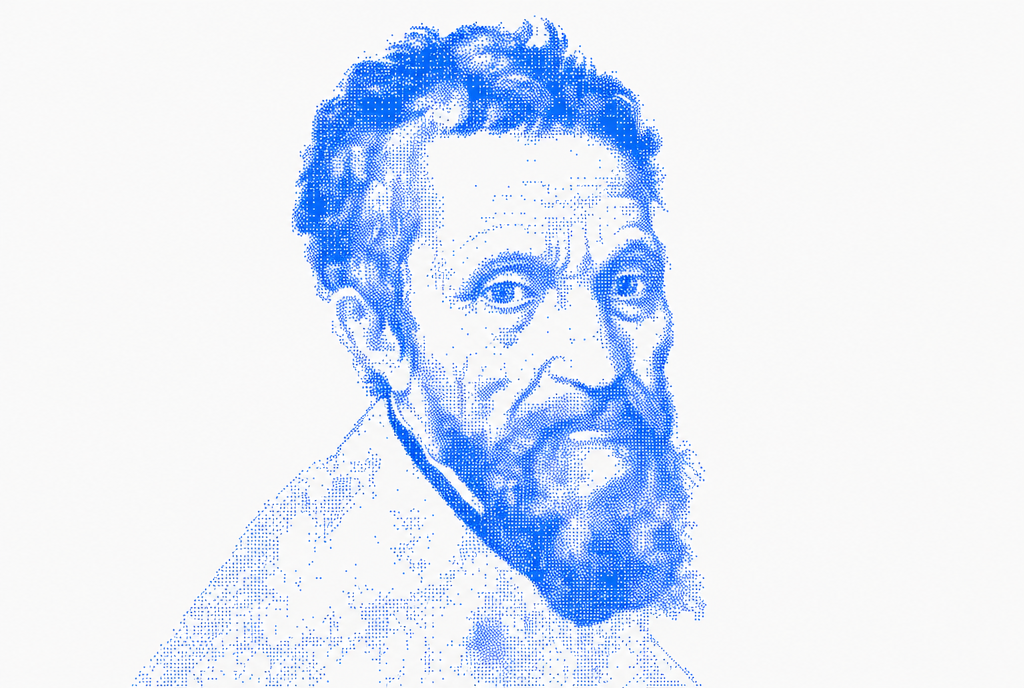
1.2 In 1501, cathedral officials offered the Giant to Michelangelo Buonarroti. He was about twenty-six and had already made important sculptures. His job was to carve a standing statue of David, the young hero from the Bible, from this block. Every cut mattered: once he removed marble, he could not put it back.
1.3 The block was long and thin. Other sculptors had already cut away some of its stone. Michelangelo had to fit David's pose and details into the marble that remained. The block was large, but it did not let him do anything he wanted.
1.4 Michelangelo had spent years learning before he took on the Giant. As a teenager, he trained in Domenico Ghirlandaio's workshop in Florence. There, young artists prepared materials, copied drawings, watched experienced painters, and practised. Michelangelo also studied older sculptures and began carving marble around 1490. He learned from other artists and their work.
1.5 The officials already had a place in mind for David. They wanted the statue high on a buttress, a support on the outside of the cathedral. People would see it from far below. Before Michelangelo began, the officials had chosen the stone, the subject, and the planned location.
1.6 Michelangelo worked on the block for nearly three years. He carved a standing David more than five metres tall. David looks alert, as if he is preparing for battle, with a sling over one shoulder. The finished statue weighed about 5,560 kilograms—about as much as several small cars.
1.7 By early 1504, Michelangelo had finished the statue that two earlier sculptors had left unfinished. But Florence's leaders still had a decision to make. David had been planned for a high place on the cathedral. Now that they could see the finished statue at ground level, did that place still make sense?
PASSAGE 2 OF 4
The Statue That Changed Sides
2.1 It took more than forty workers four days to move David a few hundred metres through Florence. The statue was about 5.17 metres tall and weighed more than five metric tons. If it tipped or cracked, years of work could be damaged.
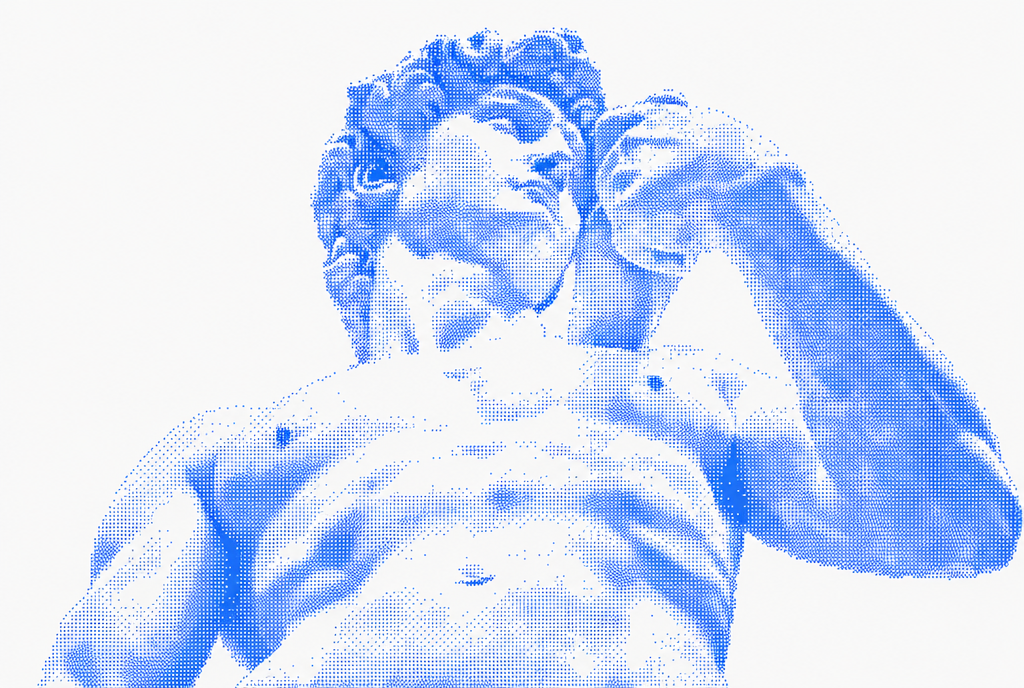
2.2 Cathedral officials asked a group of artists and citizens where David should stand. Leonardo da Vinci and Sandro Botticelli were among them. The statue had been made for the cathedral, but the group chose a place near Palazzo Vecchio, where Florence's government worked. Michelangelo took part in the discussion, but the choice was not his alone.
2.3 Workers built a huge wooden cage around David to support and protect it. They moved the cage slowly over logs that worked like rollers. The trip was only about four hundred metres, but moving such a tall, heavy statue safely took four days.
2.4 The new place changed how people saw David. High on the cathedral, it would have looked like part of a religious building. Near Palazzo Vecchio, people could walk close to it and see David's face, sling, and watchful look.
2.5 People in Florence began to see David, a young hero facing a stronger enemy, as a sign of their republic's strength and independence. Michelangelo had not changed the statue. Its new place, and the people who saw it there, gave it a new public meaning.
PASSAGE 3 OF 4
The Ceiling That Looked Different from Below
3.1 Four years after David was moved, Pope Julius II asked Michelangelo to repaint the Sistine Chapel ceiling in Rome. Michelangelo was about thirty-three. People knew him best as a sculptor, though he had first trained as a painter. The chapel was about forty metres long and thirteen metres wide. Its ceiling was about twenty metres above the floor.
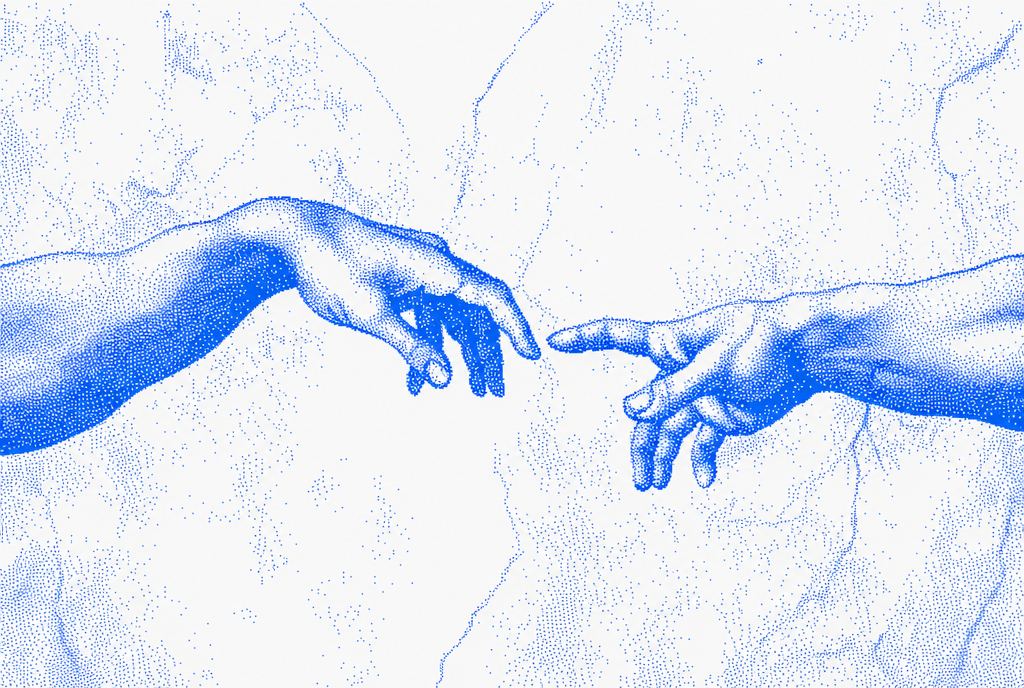
3.2 Michelangelo did not paint while lying on his back. He stood on scaffolding and reached above his head with his brush. The platform brought him close to the ceiling, but it blocked some daylight. He used lamps to see, while paint, plaster, and dust could fall toward his face.
3.3 At first, the plan was to paint twelve apostles with decoration around them. The plan grew much larger. The finished ceiling had nine scenes from the Book of Genesis and hundreds of figures. Michelangelo designed and painted most of it. Assistants helped with some preparation, including work with the plaster.
3.4 Michelangelo painted on fresh, damp plaster. This method is called fresco. He had to paint each section while the plaster could still take in the colour. Once it dried, he could not work on it in the same way. That meant he needed to plan each section before the plaster went up.
3.5 The scaffolding let Michelangelo see small details up close. But visitors would see the painting from the floor, far below. While he was on the platform, he could not fully tell how the first half would look from where they stood.
3.6 In 1510, workers took down the scaffolding beneath the first half. Michelangelo could finally look up at his work from the floor. From that distance, some details and groups of figures were harder to see clearly.
3.7 In the second half, Michelangelo made the figures larger and the scenes easier to see. He could not lower the ceiling, so he changed the painting to suit the people looking up at it. When the ceiling opened in 1512, it showed what he had learned by viewing his work from the floor.
PASSAGE 4 OF 4
The Building He Would Never See Finished
4.1 In 1546, Michelangelo became chief architect of the new St. Peter's Basilica in Rome. He was seventy-one. After years of carving, painting, drawing, and designing buildings, he now had to lead a project that other people had started—and that other people would finish.
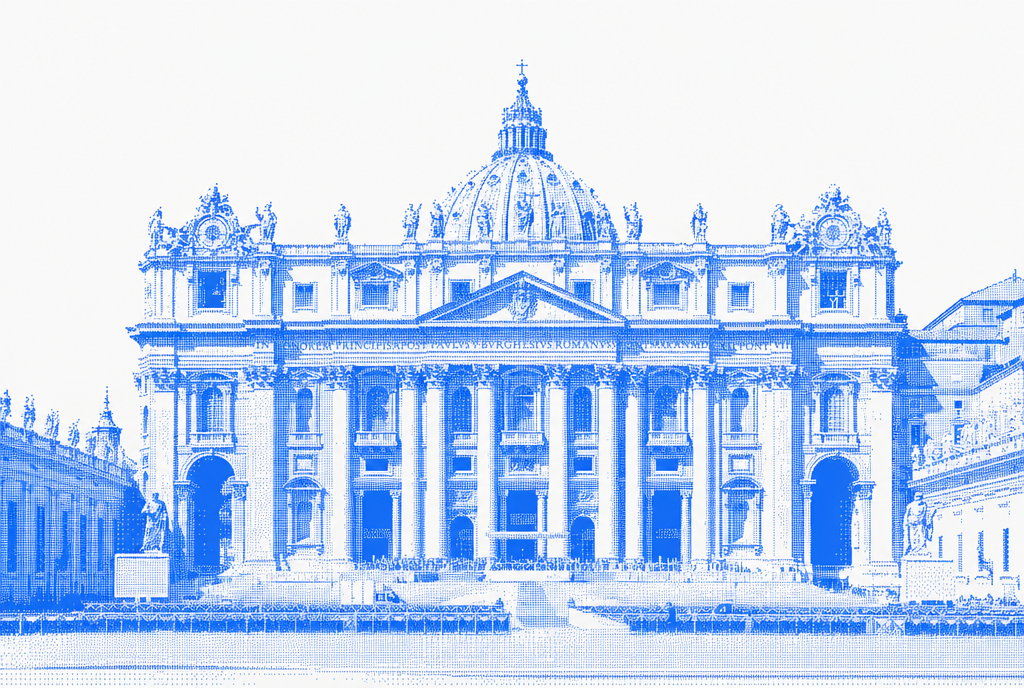
4.2 Building work had begun in 1506. Bramante, Raphael, Peruzzi, and Antonio da Sangallo the Younger had already made plans or worked on the church. Parts of the building were in place, and the architects had left different ideas behind. Michelangelo could change some of their work, but he had to work with what was already there.
4.3 The enormous dome above the centre of the church had not yet been built. It needed strong support below it. Michelangelo worked on the large supports and the drum, a round wall that would hold up the dome. Builders, engineers, stonecutters, and other workers had to turn his plans into stone.
4.4 Michelangelo could not keep the whole design in his head and expect others to build it. He made drawings and models they could study. Between about 1558 and 1561, workers built a large wooden model of the drum and dome. It was one fifteenth the size of the planned structure and showed its shape in three dimensions.
4.5 Michelangelo was in his eighties when the model was made. He died in 1564, aged eighty-eight. By then, the drum was built or nearly finished, but the dome above it was not. The drawings, model, and completed stonework helped later builders understand his plans.
4.6 More than twenty years later, Giacomo della Porta and Domenico Fontana led the work on the dome. About 800 workers helped build it between 1588 and 1590. The finished dome was taller and more pointed than Michelangelo had planned. Later builders followed his ideas, but they also changed them.
4.7 Today, visitors see one dome. They may not see how many people worked on it across many years: architects before Michelangelo, Michelangelo himself, and the builders who came after him. Like David and the Sistine Chapel ceiling, it was shaped by more than one famous artist.
EXPLAIN IT · FROM MEMORY · ON PAPER
What can you explain without looking?
You can write, draw, or make a map of your ideas. Finish before looking back, and keep this first try so you can see what changes later.
- How did the old cuts and the new location each shape David?
- What did Michelangelo learn when he saw the ceiling from the floor, and what did he change?
- Why is the finished dome more than Michelangelo's work alone?
CHECK AND IMPROVE · ON PAPER
Check your explanation
It’s normal to miss something or get part of it wrong on your first try. Checking helps you see what you understood and what needs another look.
Reopen the reading and turn your notes face up. Use a different color, and keep your first try visible.
- Add any important idea you missed.
- Fix anything you got wrong.
- Make any confusing part clearer.
- If an idea is already correct and clear, write “got it” beside it. You don’t need to find a mistake in everything.
Use these locations to compare your ideas with the reading. They show where to look—not what your answer should say.
- Question 1Passage 1, 1.1–1.3 and 1.6–1.7Passage 2, 2.1–2.5
- Question 2Passage 3, 3.5–3.7
- Question 3Passage 4, 4.1–4.7
FIND WHAT TO IMPROVE · ON PAPER
Choose one thing to try next
After you review and improve your answers, pick ONE strategy or way to improve for your next reading.
Look at your first answer and your different-color changes.
- What held up? Find one idea you explained clearly.
- What changed? Find the most important thing you added, corrected, or made clearer.
- What could help next time? Choose one small action to test during your next reading.
Choose from what you noticed
Choose one strategy to continue.