How a Game Builds a World Around You
Explain which problem each part of a generated-world system solves.
- 1 What You Know
- 2 Read, Pause & Note
- 3 Explain It
- 4 Review & Improve
- 5 Find What to Improve
Click a word to select it silently, then press Resume or Space.
PASSAGE 1 OF 4
You Cannot Place Every Tree
1.1 A game studio wants to build a world with forests, mountains, caves, towns, and thousands of small objects. The team can place important landmarks by hand. But placing every tree and rock would take a long time. Making another varied world would mean doing much of that work again.
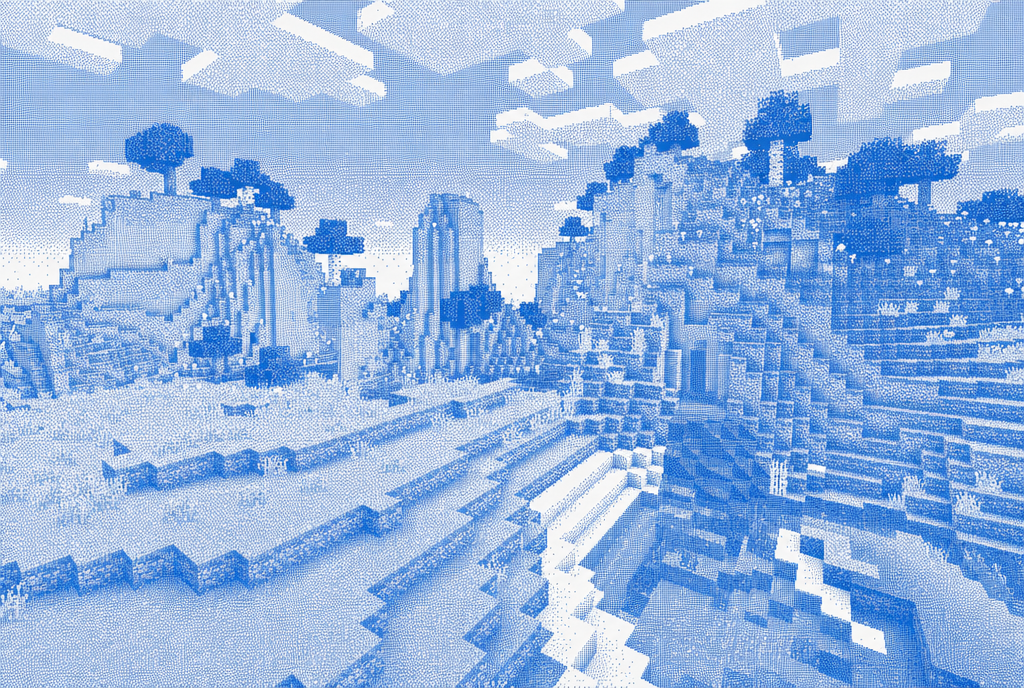
1.2 The studio can make rules for building parts of the world. This is called procedural generation. A computer follows the rules to create game content. Instead of choosing the location of every tree, designers decide how tree locations will be chosen.
1.3 People create those rules. Programmers write algorithms—instructions for the computer. Artists make the trees, rocks, buildings, and ground pieces. Designers decide how often things appear and where they are allowed. For example, a tree should not grow in deep water, and a building should not cut through another building.
1.4 The computer uses these choices again and again. It can place trees in a forest, shape caves, or connect rooms. The studio can reuse the rules to make many worlds. It can also build an important town by hand and generate the land around it.
1.5 This does not mean AI created the world on its own. People made the pieces and decided how the system works. The computer follows their instructions in many places instead of making the team place every object.
1.6 The studio has found a faster way to build a large world. But now it faces another problem: if the computer makes different choices each time, a mountain the player found today might be gone tomorrow. How can the world stay the same when the player returns?
PASSAGE 2 OF 4
The World Must Come Back the Same Way
2.1 Imagine finding a mountain beside a cave, leaving, and coming back later. You expect both to still be there. The game can rebuild the same untouched place if it uses the same seed and compatible rules, settings, and game version. If those change, the place may look different.
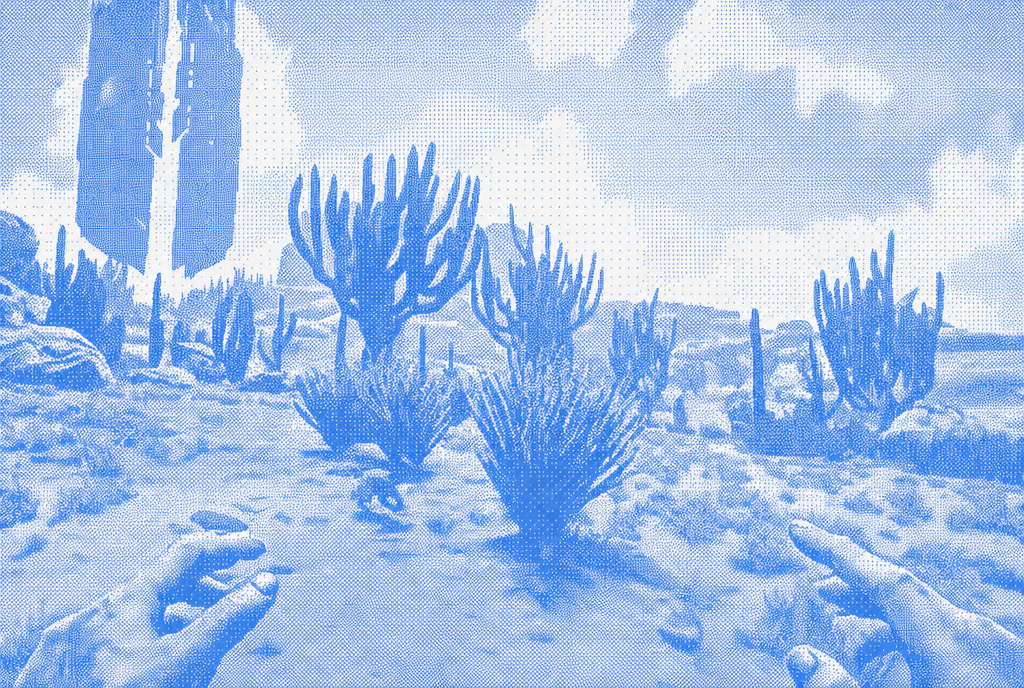
2.2 Many games use numbers that seem random but come from an algorithm. With the same setup, the algorithm can produce the same numbers again. A seed is a starting input that helps set those repeatable choices.
2.3 The game also needs to know where to build. Coordinates are like an address for a place in the world. The generator uses the seed, the coordinates, and other settings to make values for that place. Rules turn those values into terrain.
2.4 Here is a simple example, not a formula every game uses. Seed 84 and location (12, 30) produce a value. In this example, the terrain rules turn that value into a forest:
- Seed 84 + location (12, 30)
- repeatable value
- terrain rules read the value
- forest
2.5 Keep the location but change the seed to 91. Now the generator produces a different value, and the example rules turn it into a desert. Real games often use many values and rules to decide what a place becomes.
- Seed 91 + location (12, 30)
- different value
- terrain rules read the value
- desert
2.6 The seed does not contain a tiny copy of the whole world. The game's algorithms, art pieces, settings, coordinates, and rules build the world. The seed helps choose among the possibilities. Another game—or even another version of the same game—may build something different from that seed.
2.7 Now the game can rebuild the same untouched place. But a repeatable world can still look strange. If the height of every nearby spot is chosen separately, the ground might form a mess of spikes.
PASSAGE 3 OF 4
Pure Randomness Destroys the Landscape
3.1 Imagine walking across ground that jumps from low to very high and back down with every step. It would look like sharp spikes. Trees might stand on steep slopes, roads might break apart, and a cave entrance might be blocked. A player could even start inside a wall.
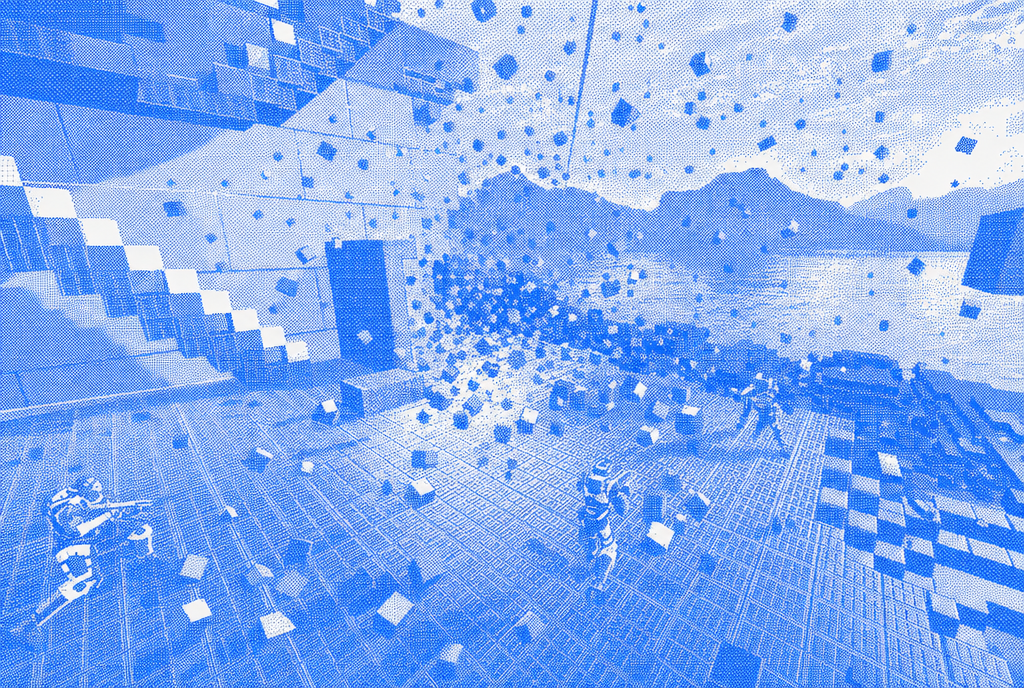
3.2 One way to avoid this is a spatial noise function. It gives nearby places related values, so the ground usually changes gradually instead of jumping wildly. Those values can help form slopes, valleys, plains, and mountains.
3.3 Designers can combine large and small patterns. A large pattern shapes broad areas, such as mountain regions and plains. A smaller pattern adds hills and valleys. An even smaller one adds surface details. The details fit inside the larger shapes.
3.4 The values do not tell the game, “This is a forest” or “This is water.” Rules make those decisions. For example, values below a chosen threshold might become water. Height, temperature, and moisture can help choose a biome, such as a desert or forest. Artists make the objects that appear there.
3.5 Designers also set constraints—rules that prevent bad placements. A tree might be kept off a steep cliff. Buildings should not overlap. A path should reach its destination, and a player should start somewhere safe to stand.
3.6 Spatial noise and constraints have different jobs. Noise helps nearby places fit together. Thresholds and other rules turn the values into terrain, while constraints prevent placements that would not work. Games can use other methods too; noise alone does not build a complete world.
3.7 The studio can now make a world that stays the same and has land that fits together. But the world may be too large for the computer to keep every part active. Which parts does it need right now?
PASSAGE 4 OF 4
The Whole World Cannot Stay Loaded
4.1 In some games, you can keep traveling while new land appears ahead of you. That does not mean every faraway tree, mountain, creature, and room is active in the computer at once.
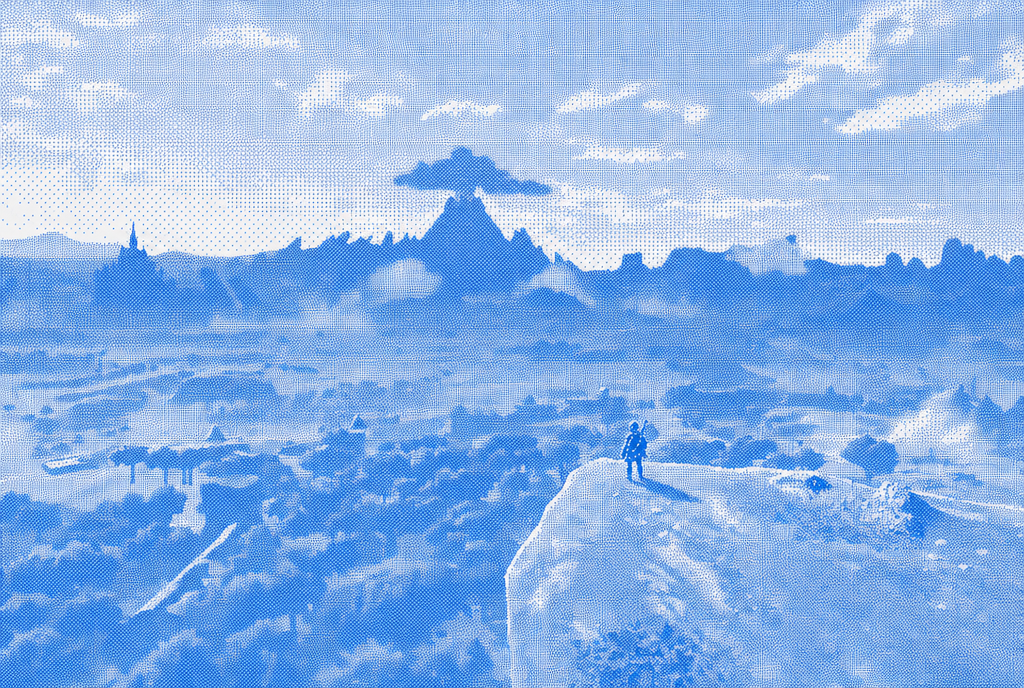
4.2 The game uses active memory for things it needs right now. It uses storage to keep saved information for later. Keeping the whole world active would use memory and processing power on places the player cannot see.
4.3 A game may split the world into regions called chunks. It loads or creates detailed chunks near the player. Faraway regions may have less detail, stop updating, leave active memory, or wait to be created until the player gets closer.
4.4 Coordinates tell the game which chunk it needs. With compatible inputs, the generator can rebuild an untouched chunk. But it cannot guess what the player changed. If the player builds a house or removes a tree, the game may save that change separately.
4.5 Chunks and procedural generation are different tools. A hand-built world can use chunks to load one region at a time. A generated world can organize its work in other ways. Games choose the approach that fits their design.
4.6 Loading only what is needed lets the computer focus on the area near the player. Rules create possible places, the same compatible inputs can rebuild untouched places, and chunks help the game manage which areas need attention now.
4.7 Such a world can feel enormous, but it has limits. The game, computer, and storage cannot handle endless space. New areas appear as the player reaches them because the game creates or loads those areas when needed.
EXPLAIN IT · FROM MEMORY · ON PAPER
What can you explain without looking?
You can write, draw, or make a map of your ideas. Finish before looking back, and keep this first try so you can see what changes later.
- How can a seed, a location, and a compatible generator make the same untouched place return?
- Why does independent randomness damage a landscape, and how do noise and constraints repair it?
- How can chunks manage nearby land, distant regions, and changes made by the player?
CHECK AND IMPROVE · ON PAPER
Check your explanation
It’s normal to miss something or get part of it wrong on your first try. Checking helps you see what you understood and what needs another look.
Reopen the reading and turn your notes face up. Use a different color, and keep your first try visible.
- Add any important idea you missed.
- Fix anything you got wrong.
- Make any confusing part clearer.
- If an idea is already correct and clear, write “got it” beside it. You don’t need to find a mistake in everything.
Use these locations to compare your ideas with the reading. They show where to look—not what your answer should say.
- Question 1Passage 2, 2.1–2.7
- Question 2Passage 3, 3.1–3.7
- Question 3Passage 4, 4.1–4.7
FIND WHAT TO IMPROVE · ON PAPER
Choose one thing to try next
After you review and improve your answers, pick ONE strategy or way to improve for your next reading.
Look at your first answer and your different-color changes.
- What held up? Find one idea you explained clearly.
- What changed? Find the most important thing you added, corrected, or made clearer.
- What could help next time? Choose one small action to test during your next reading.
Choose from what you noticed
Choose one strategy to continue.