How Diné Marines Built the Navajo Code
Explain how Diné Marines built, improved, and operated a special communication system - and why its larger history matters.
- 1 What You Know
- 2 Read, Pause & Note
- 3 Explain It
- 4 Review & Improve
- 5 Find What to Improve
Select passage text to highlight it, or click a word to select it silently.
PASSAGE 1 OF 4
The Message That Could Not Wait
1.1 A short military order might say which unit should act, where it should go on a map, and what it should do. A radio or telephone can send that order quickly across a battlefield. But an enemy might pick up the signal too.
1.2 Picking up a message does not mean the enemy can understand it. But if they figure out what the order means, the troops could be in danger. The military needed a way to send messages quickly while keeping their meaning secret.
1.3 A coded message could stay secret, but turning it into code and then reading it could take too long. Trained people needed to send and understand the same code quickly and correctly. This was the problem the U.S. Marine Corps faced in 1942.
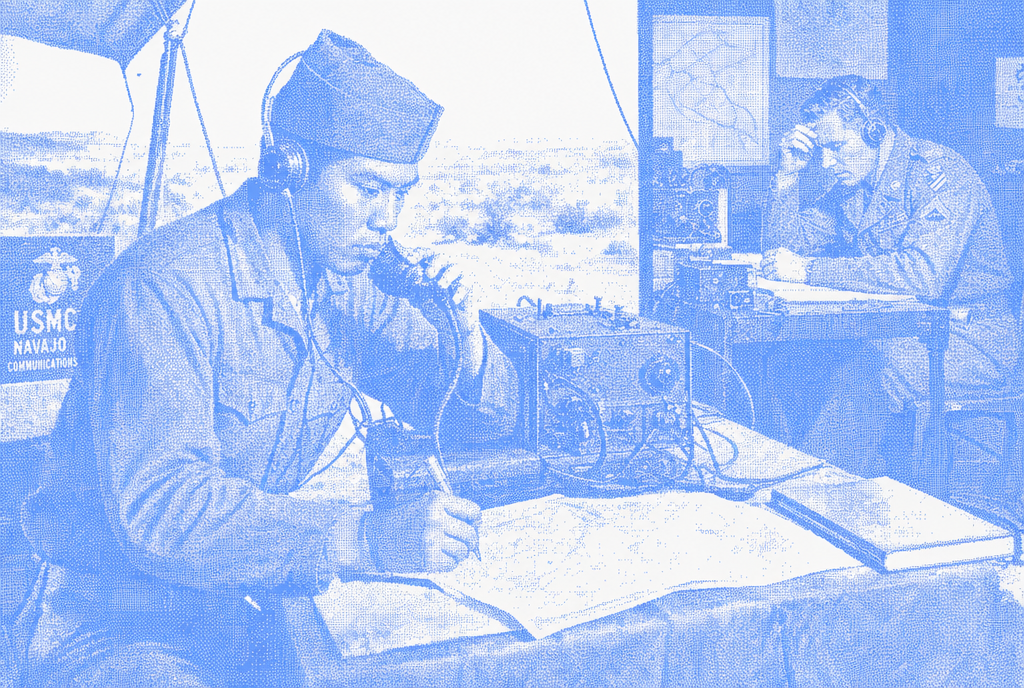
1.4 Philip Johnston suggested that the Marine Corps recruit Navajo speakers. His idea helped start the program. Many Navajo people call themselves Diné and call their language Diné Bizaad.
1.5 In 1942, the Marine Corps recruited 29 Navajo men for training. At Camp Elliott, they worked with communications staff. Their job was more than speaking everyday Diné over the radio.
1.6 Together, they built the first version of a special military code. Johnston suggested the program, but the first 29 Diné recruits built the original code with communications staff.
1.7 The code needed to cover military words, names, and places. It also needed a way to send words no one had planned for. How could one code do both?
PASSAGE 2 OF 4
Building and Rebuilding the Code
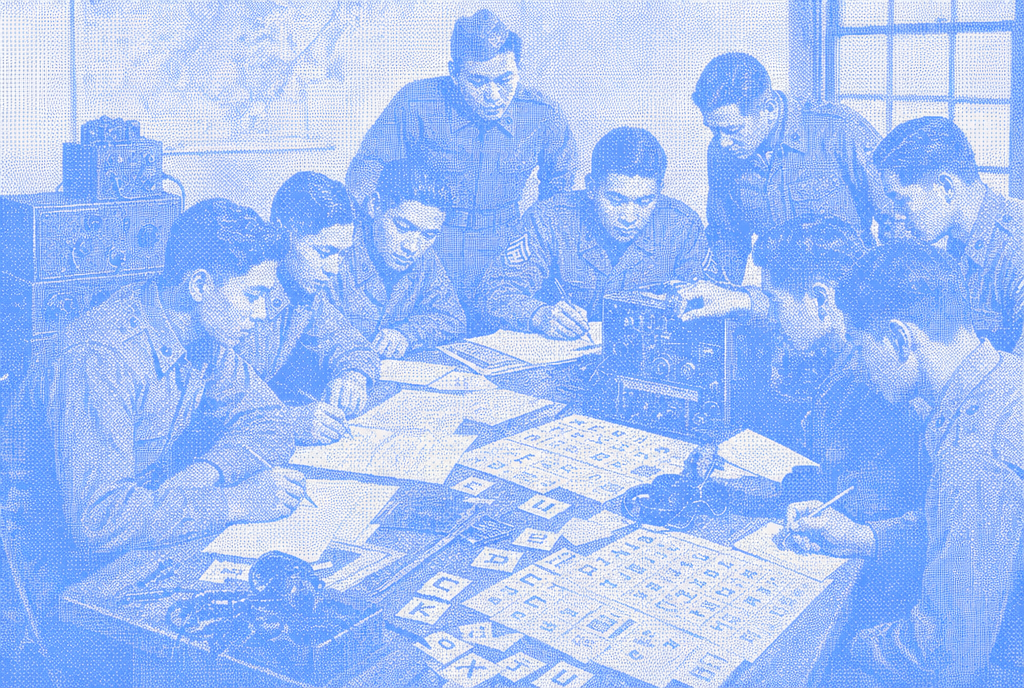
2.1 At Camp Elliott, the first 29 Diné recruits worked with communications staff to build the code. They needed to give military ideas meanings that trained Code Talkers could recognize quickly. The first version had about 211 terms.
2.2 One part of the code gave Diné words special military meanings. For example, a word linked to a hummingbird meant a fighter plane in the code. The word still had its usual meaning in Diné. It meant a fighter plane only to people who knew the code.
2.3 The recruits chose these images and gave each one a military meaning. An image could help a trained Code Talker remember its meaning. But an enemy who heard the word would not know what military idea it stood for without knowing the code.
2.4 Another part of the code was an alphabet for spelling. The first 29 made code terms for all 26 English letters. Code Talkers could use them to spell names, places, and words that were not in the special vocabulary. That let them send information the code makers had not planned for.
2.5 The first version needed changes. A code expert noticed that spelling words often could make patterns repeat. Someone studying the radio messages might spot those patterns. After the code was used and checked, it was revised.
2.6 Letters used often in English got extra code terms. The spelling alphabet grew from 26 to 44 terms. The military vocabulary grew from about 211 to about 411 terms. Training and shared rules helped Code Talkers use the expanded code the same way in different places.
2.7 The code was built, tested, and improved. But it would only work if Code Talkers could remember it, send messages correctly, and turn coded messages back into the original words during military operations. What did that take?
PASSAGE 3 OF 4
From English Order to Received Message
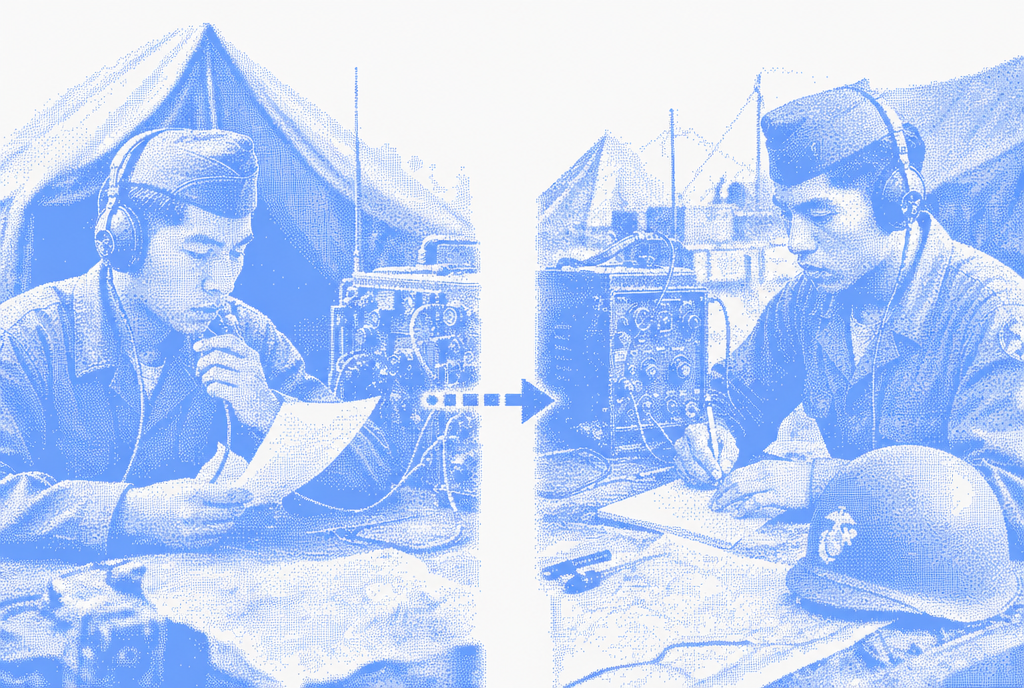
3.1 A military order could start in English, spoken or written. A trained Code Talker had to understand what the order meant, then change it into the special code they had memorized. People moved the message through each step.
3.2 Each step needed human knowledge: Diné Bizaad and English, the special vocabulary and spelling alphabet, strong memory, training with communications equipment, and an understanding of the order. A sender could turn a written English order into code and send it without writing down every coded term.
3.3 Another trained Code Talker received the message and used the same memorized code to work out its English meaning. The receiver could write it in a log or give it to the person who needed it. Code Talkers used radio and wire equipment. Some carried that equipment as they moved.
3.4 Written training materials and agreed rules did exist. But during a battle, Code Talkers had to rely on memory and communication skills. They could not look up every term in a codebook while a message needed to move quickly.
3.5 The special code was used when a message needed to be kept secret. Not every military message needed it. Even if an enemy picked up a coded message and understood Diné Bizaad, they would still need to know the code's special military meanings and spelling alphabet.
3.6 Official estimates say more than 400 Diné Marine Code Talkers served. The exact number varies because some records are missing. Many trained people learned and used the system first built by the original 29, in small units and across larger operations.
3.7 The message path depended on trained people. Diné Bizaad did not do the work on its own. The story also has a painful history: children had been punished for speaking this language in many boarding schools.
PASSAGE 4 OF 4
The Language Punished, Needed, and Hidden
4.1 Before the war, government- and church-run boarding schools were part of forced-assimilation policies. Native children were separated from families and cultural practices. Many were forbidden or punished for speaking their languages.
4.2 Many Code Talkers had attended such schools. In later recollections, Code Talkers described punishment for being caught speaking Navajo. The policy harmed children, families, communities, and languages. It was not a minor rule or a background detail.
4.3 During World War II, the U.S. military depended on Diné speakers, Diné Bizaad, and the special system Diné Marines had created. The contradiction is plain. Military dependence on Diné Bizaad did not make earlier punishment acceptable or repair its harm.
4.4 After the war, the program remained classified until 1968. Because the program remained restricted from public release, Code Talkers could not freely explain what they had done. That secrecy delayed broad recognition for decades.
4.5 In 2001, the original 29 Navajo Code Talkers were honored with Congressional Gold Medals, while other Navajo Code Talkers were honored with silver medals. Recognition names an achievement. It does not erase the earlier forced-assimilation policies or the years when Code Talkers had to remain silent.
4.6 Code Talkers came from many Native nations. The Navajo Marine program was the largest and most systematic, not the only Native Code Talker tradition. Diné Bizaad is a living language today, not a wartime artifact or a museum puzzle.
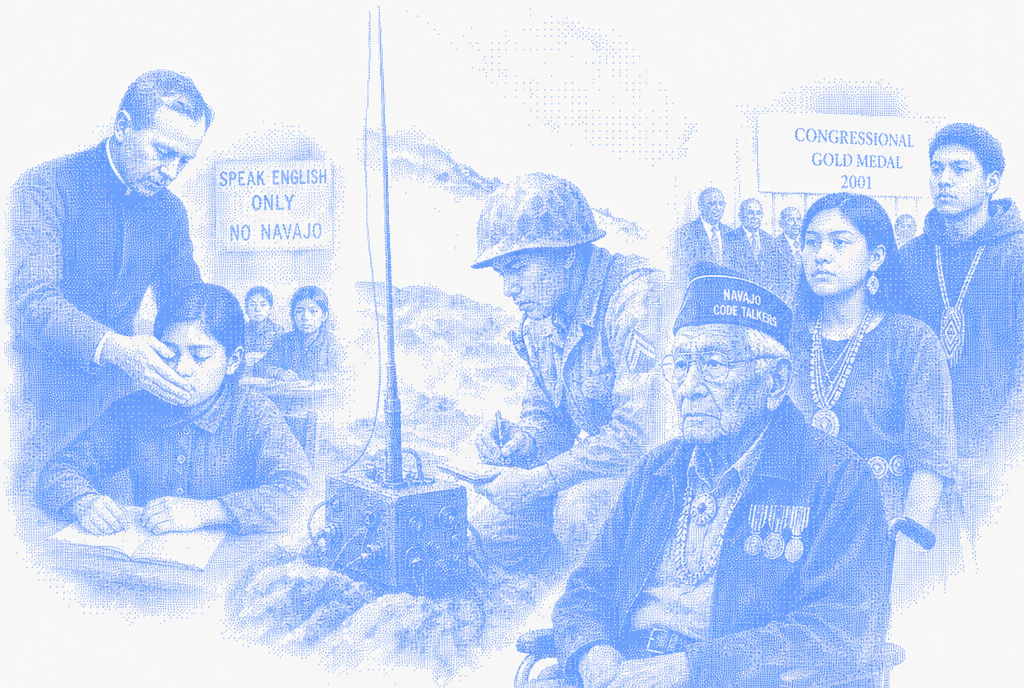
4.7 This history holds several truths together: language suppression; Diné authorship; trained wartime service; secrecy; delayed recognition; and the continued life of Diné Bizaad. The Code Talkers' achievement belongs to Diné people and the individual Marines who built and operated the system—not only to the institution that used their work.
EXPLAIN IT · FROM MEMORY · ON PAPER
What can you explain without looking?
You can write, draw, or make a map of your ideas. Finish before looking back, and keep this first try so you can see what changes later.
- What did the first 29 Diné recruits build, and why did the military need that system instead of simply sending ordinary messages in Diné Bizaad?
- How did the code's vocabulary and alphabet solve different problems, and what changed when repeated alphabet patterns created a possible weakness?
- Why did the Navajo Code require trained people, and why must their wartime work be taught beside boarding-school suppression and delayed recognition?
CHECK AND IMPROVE · ON PAPER
Check your explanation
It’s normal to miss something or get part of it wrong on your first try. Checking helps you see what you understood and what needs another look.
Reopen the reading and turn your notes face up. Use a different color, and keep your first try visible.
- Add any important idea you missed.
- Fix anything you got wrong.
- Make any confusing part clearer.
- If an idea is already correct and clear, write “got it” beside it. You don’t need to find a mistake in everything.
Use these locations to compare your ideas with the reading. They show where to look—not what your answer should say.
- Question 1Passage 1, 1.1–1.7Passage 2, 2.1–2.7
- Question 2Passage 2, 2.1–2.7
- Question 3Passage 3, 3.1–3.7Passage 4, 4.1–4.7
FIND WHAT TO IMPROVE · ON PAPER
Choose one thing to try next
After you review and improve your answers, pick ONE strategy or way to improve for your next reading.
Look at your first answer and your different-color changes.
- What held up? Find one idea you explained clearly.
- What changed? Find the most important thing you added, corrected, or made clearer.
- What could help next time? Choose one small action to test during your next reading.
Choose from what you noticed
Choose one strategy to continue.